Sunday, January 25, 2015

But It's Not My Fault!

"It it easy to dodge our responsibilities, but we cannot dodge the consequences of dodging our responsibilities."  
~  Josiah Charles Stamp, English Economist


In the Kids Week Jeopardy video that aired on December 3rd, Alex Trebek tells the contestant, who ended the show with $1,400 in debt, "We have bad news for you, because you're in the negative situation, it means you won't be around for Final Jeopardy, but you'll automatically pick up $1,000 for a third place finish."

Seems harmless enough, right? You wouldn't expect this kind of comment from Trebek to eventually cause him to think about leaving Jeopardy after hosting it for more than 30 years (since 1984). So, why did it? Because one mom wasn't prepared to let her child learn about consequences. Let me explain.

Though Trebek followed standard show protocol, he reportedly did not make enough of an effort to make the failed competitor feel better. He was given a lot of flak over this and was eventually asked to re-tape the last moment after the third place finisher "was visibly upset" and ran backstage. Why was this such a big deal? Because the girl's mother complained and blamed Trebek.

The mother wrote a letter to the producer explaining that she was "quite a bit taken back" by how Trebek handled the situation. "If he had taken the time, he would have known, like you do, that my daughter is not a sore loser, and does not become emotional solely over losing a game," she wrote. "She was upset about not being able to completely play the game to the end...I don't think I'll ever forgive him for that."

So the girl throws a fit because she loses the game (in which she still wins $1,000) and suddenly Alex Trebek is the one responsible? The girl, who is definitely a sore loser, embarrasses herself on TV and it's the host of the show who is to blame because he said the same thing to her that he has said to thousands of competitors before her? Seems to me that the girl's mother should spend more time teaching her child how to take responsibility for her choices and less time blaming others for her child's behavior.
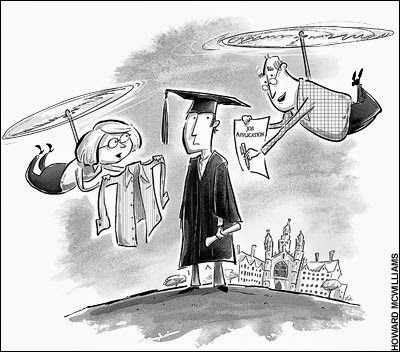

Overall, responsibility seems to be a disappearing value in our society today. Adults want to take less and less of it (why get a job if the government will just give you money) and many parents don't want to teach their kids to take responsibility (it's too hard).

Society definitely isn't helping out. Our society is all about instant gratification. Credit cards allow you to buy things you haven't worked for. Video games let you get the feeling of having accomplished something without really doing anything. (I'm not knocking gamers because I really love video games, but I'm just saying.) People want to take a pill or even get surgery to magically lose weight instead of putting forth actual effort and making hard choices. Social media skews your perspective and creates an environment of instant gratification as you tweet or post about every small detail of your day. And advertising is constantly filling us with the message that we deserve what others have and that we need whatever product they are selling right now.

On the other hand, responsibility involves hard choices, patience, and work. Seems kind of bland and boring when put up to all of that glitz.

As a parent you are either struggling to teach your kids responsibility, or you are taking responsibility for them in order to protect them (which does just the opposite). Psychologist Dr. John Duffy says, "When kids learn to take responsibility, they are empowered, competent, and resilient, that they can take on the real world in an authentic way. We rob them whenever we take responsibility for their actions ourselves."

As a parent, teaching responsibility and allowing our child to reap the consequences of their actions can be a little hard because you don't like to see your child experience pain or sadness of any kind. You internally want to shield them from anything that might upset them, but doing that can be incredibly detrimental.

"If they fail to learn the responsibility lesson, kids have a very hard time transitioning into adulthood," says Dr. Duffy. "Many feel wholly disempowered and incompetent, in work and other areas of their lives, because of their lack of practice taking responsibility earlier in their lives. This is no small thing, as for many adults it leads to a lifetime failing to meet potential, which often results in feelings of depression and anxiety."


So don't be like the Jeopardy mom. The next time your child gets a bad grade at school, don't blame the teacher for your child not learning the material or doing the work. The next time your teenager gets a speeding ticket, don't blame the officer who was "obviously just trying to fill his quota." The next time your child gets in trouble, don't blame those "bad kids that he hangs around with."

Instead, help your child become a happier and more successful adult in the future, by teaching them today that their actions have consequences and how to take responsibility for them. And, as we all know, one of the best ways to teach anything is by example.


To learn more about teaching responsibility:

Wednesday, January 21, 2015

Vacations, Don't You Want One?

I have been absent on my blog and I apologize. If it makes you feel any better, I was also absent from my house. I have spent the last couple of weeks in Florida with my family. My husband and I went to do the Goofy (the Walt Disney World half marathon and full marathon back-to-back), my kids went to run in Disney kid races (including the Mickey Mile), and we all went to have fun in the sun and at amusement parks. It was fun living in another world for a while.

It was also good to come home. It is nice to be in my own house again and it is even nice to be back in a routine. I didn't stop writing Book 2 while I was in Florida, but I definitely didn't do any technical writing while I was gone. This was also a breath of fresh air.

I've mentioned my husband and I like to dress up :)

We all need vacations, whether grand excursions or just small breaks from the norm. According to WebMD, if you don't take a vacation every now and then, you could "experience burnout, reduced productivity, diminished creativity, failed relationships, stress, or stress-related ailments such as depression, heart disease, or stomach ulcers" (http://www.webmd.com/balance/features/help-for-the-vacation-deprived). So you can all see why I took a vacation. I was really just trying to stay healthy. :)

Interesting fact that I also discovered on WebMD: Americans receive an average of 14 vacation days, Australians get 17, Canadians take 19 days, Brits get 24 days, Germans have 27 days, and the French receive 39 vacation days. Anyone else moving to France?

So here are five reasons for the rest of you to take a vacation (taken from Health Magazine):

  1. Help you bust the stress rut (and maybe your stress gut): Just having a weekend getaway can help reduce stress hormones and even lower your blood pressure. Plus stress helps pack on the pounds, so take a vacation to get rid of the stress and who knows how the scale may react?
  2. Give your heart a break: A study showed that women who take at least two vacations a year are eight times less likely to have coronary heart disease. And another study showed that men who didn't take an annual vacation were 32% more likely to die from a heart attack than the vacationers. 32%!!!
  3. Help you get closer to your family: Vacations help families connect. Those new, shared experiences promote a closeness and positive ties that last far after the vacation ends.
  4. Make you smarter at work: Vacations can be the pause that refreshes you-especially if you spend it disconnected from electronic devices and catching up on sleep. You may even be better at your job. (Now I'll know why those chapters I wrote on vacation are so much better than other chapters.)
  5. Make you happier: A study showed lower levels of tension and depression among women who took vacations frequently (once or twice a year) versus those who vacationed less often. In fact, it turns out that even anticipating a vacation is a mood booster. (So if you aren't currently on a vacation, you can make yourself happier right now by just thinking about taking one. Is anyone else suddenly on a beautiful sandy beach with the waves gently roaring in the background?)

So now that I have less stress, a healthier heart, am closer to my family, am smarter, and happier, I'm ready to get back to work. Well, sort of.

You can read the whole article in Health Magazine at: http://news.health.com/2013/07/11/5-healthy-reasons-to-plan-your-vacation-right-now/

Wednesday, December 31, 2014

Anna VS Elsa


When our family saw Frozen for the first time my two daughters chose their favorites. My oldest followed the rest of the world and chose Elsa, but my youngest immediately latched onto Anna.
"You Elsa and I Anna!" She would enthusiastically yell each time she wanted to play Frozen. It was the cutest.

About two months ago my little peanut started moving more towards Elsa's side. It started innocently enough. At first she just wanted to sing, "Let it Go" more often than "Do You Want to Build a Snowman." But soon it became "You Anna and I Elsa." Sad.

For Christmas we gave her a simple Elsa dress and a tricked out Anna dress. The Anna dress has a button that plays the first few lines of "For the First Time in Forever" and causes the dress to light up like a Christmas tree. My husband and I were desperately trying to get her to like the Anna dress more, but it hasn't worked. She wears the Elsa dress twice as much as the Anna dress.

And in the end it saddens me. All the little girls everywhere love Elsa but I think that they should love Anna. In a battle of role models Anna beats Elsa into the ground. And as a parent I would much rather my daughters aspire to be Anna instead of wanting to be like Elsa. Let's take a look at them shall we, and you'll see my point.

Elsa (for most of the movie): Spends her entire life pushing everyone away from her. Is so afraid of what she is capable of that she does nothing. She is in charge of an entire kingdom and her entire focus is on herself. She doesn't think about how her actions are affecting others, nor does she try to do anything to help anyone else. She runs away from responsibility. She is cowardly, selfish, and of little good to anyone. (I know I'm being harsh.) Why do little girls everywhere worship her? She is beautiful, has great clothes, has one talent, and a catchy song. (Your typical pop star.)

Anna: Is the ultimate optimist. She looks for joy and happiness in everything around her and tries to share that joy with others, even if she is shot down again and again. She is courageous, adventurous, and full of life. She risks her life to save her sister and her kingdom (more than once). She faces her fears and doesn't take crap from anyone (not even Marshmallow). She is warm and loving. And she believes in true love. And even though true love with Hans doesn't work out, I still love that she believes in it so sincerely. Plus, she jumps right back in the game with Christoph even though her last boyfriend left her to die, tried to take over the kingdom, and almost slayed her sister. Not a lot of women could do that. She is the kind of woman that I want my daughters to become.

So what do I do about my littlest daughter's switch in allegiance? I'm not exactly sure. But you just might start hearing "Do You Want to Build a Snowman" and "For the First Time in Forever" a lot more at our house.

Anna is My Hero!

This YouTube video sums things up pretty well: https://www.youtube.com/watch?v=buem1Yhtkxs

Monday, December 15, 2014

Spark Your Brain

"In order for man to succeed in life, God provided him with two means, education and physical activity. Not separately, one for the soul and the other for the body, but for the two together. With these two means, man can attain perfection." 
~ Plato


I like to exercise (most days) but sometimes I get in a rut and just need some motivation, or a spark. This book did that for me. Obviously exercise is good for our bodies, and as strange as it may sound, our brains are actually connected to our bodies. So, logically speaking, exercise might also be good for our minds.

In truth, I've known this fact for a long time. What I loved about Spark is that it explained the how and why behind it. It showed through case studies, scientific analysis, MRIs, etc. exactly how exercise affects the brain and thereby our mental capacity, emotions, focus, mood, etc.

The first part of the book goes into detail and several case studies to explain how exercise improves your ability to learn and how it actually causes brain cells to grow. "Exercise improves learning on three levels: first, it optimizes your mind-set to improve alertness, attention, and motivation; second, it prepares and encourages nerve cells to bind to one another, which is the cellular basis for logging in new information; and third, it spurs the development of new nerve cells from stem cells in the hippocampus." Who knew?

The middle section of the book looks at the positive effect that exercise has on stress, anxiety, depression, attention deficit, addiction, hormonal changes, and aging. These are each separated into chapters and the authors go into a lot of detail into how and why exercise helps these conditions.

The last part of the book talks about what kind of exercise you should be doing to maximize your brain's potential.

Spark goes into a lot of detail and as you're going through the middle chapters, it can seem a little repetitive. If you aren't super into the science behind it all, I would suggest reading the first two chapters and then reading any of the middle chapters that specifically apply to you before reading the last chapter.

This book definitely motivates you to want to exercise, and who doesn't need that.

Favorite quote: "If exercise came in a pill form, it would be plastered across the front page, hailed as the blockbuster drug of the century."

Thursday, December 11, 2014

And the Nominees Are...

I just received word that The Watchers is an official nominee for the 2014 Whitney Awards! The Whitney Awards are literary awards honoring excellence in fiction.


I'm pretty excited about it! Although it's led me to thinking about why people enjoy awards so much. My husband and I are runners and a very large reason that we sign up for races is for the medals (or bling). It's not as if we wear them around town or do much with them. They serve no actual purpose, so why do we want them in the first place? Bragging rights, memento, visual reminder, because they are cool? Probably a mixture of all of those things.

The dictionary describes an award as a reward or prize given to someone who deserves or merits it. I guess we all like to feel as if we deserve something. As if we have done something of merit.

Going back to running, after a half marathon I eagerly grab my medal, but not as if I deserve it, more as if I purchased it when I signed up for the race. After running a full marathon, I wearily grab my medal knowing that I've done something of merit. Something truly hard for me. Something that required more than I thought I could give at times. I'm proudest of my marathon medals.

For me, The Watchers is more like a marathon. It took a lot of time, effort, and energy. It took learning a lot of new things. It took expanding into a new industry. Writing the book was hard, but releasing it was almost just as hard in a completely different way.

Before I published The Watchers I asked my husband, "Do you think there is a way to publish this so that everyone else can read it except for people that actually know me?" He laughed and then hugged me.

Putting your words and ideas and inspiration out there for the world to see is scary. It's even scarier when that world includes your neighbors, friends, and family.

I don't know if The Watchers will merit an award, that's up to the judges to decide, but I do know that I would feel like I put in the effort to get it. I would also really like it. It'd be a little more bling to add to my running medals.


P.S. My husband and I almost signed up for a half marathon this weekend (Baker's Dozen Half Marathon) that would have been completely out of the way, a lot of hassle, a four loop course (repeating the same course 4 times sounds awful), and would require us to eat a lot of pastries while running (also sounds awful). Why did we almost sign up, you ask. For the bling!

Now that's a medal!

Sunday, December 7, 2014

Eat Your Way to Immortality, or at Least Longevity


A new study led by Immaculata De Vivo, an associate professor at Brigham and Women's Hospital in Boston and Harvard Medical School found that women who ate a mediterranean diet had longer telomeres. What does this mean? Basically it means that eating a mediterranean diet can lead to a longer life.

I did quite a bit of research on telomeres for my book, so I'm always interested when they come up in articles. Here is a part of the article.

"Telomeres are part of your chromosomes, the thread-like structures that house your DNA. At the end of these chromosomes are telomeres, a kind of protective "cap" that keeps the structure from unraveling. It thereby protects your genetic information.


Even in healthy people, telomeres shorten with age. Shorter telomeres are associated with aging, lower life expectancy and age-related diseases such as artherosclerosis, certain cancers and liver disease."
"This study's results provide "some insight into the underlying physiologic mechanism behind this association," indicating that greater adherence to this diet is significantly associated with longer telomeres, she says. Because of the antioxidant and anti-inflammatory effects of the Mediterranean diet, following this diet "could balance out the 'bad effects' of smoking and obesity," De Vivo says.
These findings further support "the health benefits of greater adherence to the Mediterranean diet for reduction of overall mortality, increased longevity and reduced incidence of chronic diseases, especially major cardiovascular diseases."
None of the individual dietary components was associated with telomere length. Researchers suggest that means the whole diet is an important element, rather than one item being a kind of superfood."

The full article and a video can be found here: http://www.ksl.com/?nid=1010&sid=32606031

Thursday, December 4, 2014

Book Spotlight

Check out a book spotlight on my book by Bookworm Lisa at http://lisaisabookworm.blogspot.com. 

Bookworm Lisa is a book reviewer and blogger who focuses on family-friendly books. She is also a Goodreads librarian with 1,215 ratings and 1,072 reviews.